Sunday, April 10, 2011

Fad, Trend and Classic

What is a Fad?
An item of clothing or accessory that is regarded with greater enthusiasm  for a brief period of time, a current fad would be Jeggings. Jeggings are legging made to look like jeans, some times with fake pockets and zips added to make them look even closer to real jeans. When worn right they can look rather cute but when worn wrong they look just horrible. Jeggings bubbled up from the streets of Japan and became a major fashion fad in 2009. They are no longer sold in stores but you can still see people wandering around in them.

 
(Images from www.vacavoyeur.com.br and www.refinery29.com)

What is a Trend?
A Trend is the general direction fashion is moving towards. A current trend would be 70's fashion. 70's fashion is currently invading the catwalks again, but with a modern twist of course. Bell bottoms are back, bell bottoms came from the late 60s. Coco Chanel took sailors bell bottoms and re-created them into loose flowing flared pants for women and became a massive hit with the Hippies subculture.

(Images from frostmagazine.com and theprofashional.blogspot.com)

What is a Classic?
A classic is something that will always be in fashion. There are a wide range of classics in fashion such as the little black dress, scarfs, jeans, etc. A must needed classic for winter would be a scarf, scarves first came to being in ancient Rome and were made from woven cotton. They bubbled up from the farmers and soldiers. who wore scarves to shield their neck and faces from the elements, and to wipe away any sweat or dirt that built up on their faces during the day. Scarves then became used to show certain ranks in various cultures, with certain colours and fabrics meaning different things. Now they are a must have fashion item that we all turn to every year to keep warm while looking cool.
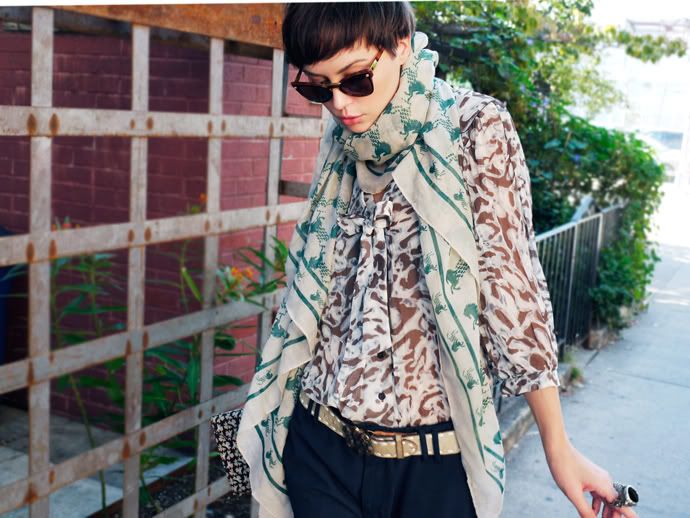

 (Images from www.fashion7days.com and www.theglamourai.com)

Sunday, April 3, 2011

Fashion and Costume Plates

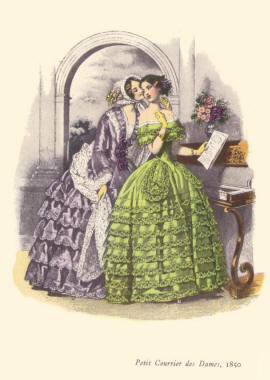
I mentioned in "Vogue History/Origins of fashion magazine" about Fashion plates, I never really went into what they are or what I meant by fashion plates. So for this article I'm going to explain what fashion plates and costume plates are briefly.

(image from community.livejournal.com/lamodeillustree/332462.html)

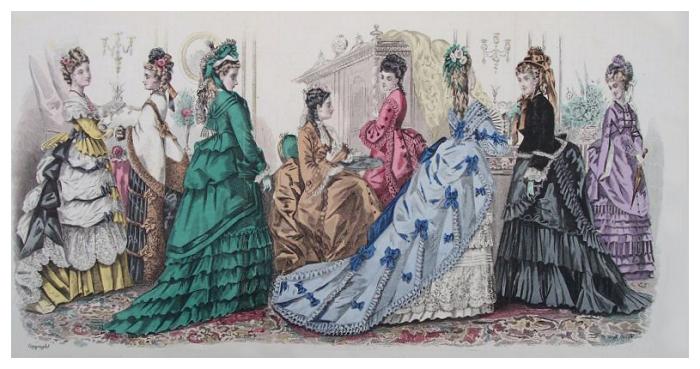
A Fashion Plate is an illustration of what is currently in fashion, and is used mainly to promote and publish possible future fashions. A Costume Plate illustrates what was once worn in the past.

(image from www.fashion-era.com)

Fashion plates first appeared in "The Lady's Magazine" in 1770 and became very popular towards the 19th century. The plates were printed in magazines aimed at women of the time. The illustrations themselves were hand colored by various artists employed by the magazine. The artists were given free range to color them however they wanted, sometimes leading to there being major differences in other copy's of the same magazine.


(image from www.fashion-era.com)

British and American fashion magazine's couldn't keep up with the creative flare of the French fashion plates, leading American and British magazine's to start importing copies of the French fashion plates to place into their magazines. This lead to British and American women being six to nine months behind in current fashion trends and styles of the time.

(image from zimmer.csufresno.edu/~monicaf/)

Monday, March 28, 2011

Vogue and the History/Origins of Fashion Magazines


The history and origins of fashion magazines goes back hundreds of years, the very first magazines where created for men by men. The very first female orientated magazine appeared just over 300 years ago in London called “Ladies Mercury”. It was founded by English publisher and journalist John Delton in 1693.

(image from www.bl.uk)

In Delton’s first address to his readers, he openly declared that his magazine will respond to the most appealing and entertaining issues related to love, marriage, behaviors, fashion and women’s humor. It also featured the very first "questions and answers" column, where the reader would send a letter to the editor and discuss everyday problems.

Soon after magazines aimed at women took Europe by storm, with Germany releasing "Gournal des Luxus und des Moden", followed by Britain with "The Lady's Magazine" and "Gallery of Fashion" and France had as many as four fashion magazines. All of them included illustrated fashion plates depicting the latest’s fashions in great detail.

(image from wikipedia.com)

But enough about the past let’s now talk about one fashion magazine that is considered a recent creation: Vogue. Vogue’s very first issue was released in 1892 (119 years ago), and was founded by Arthur Baldwin Turnure. Vogue started as a weekly publication for New York socialites but became a mass-market magazine over time. 

Vogue 1892
(image from thefashioninsider.tumblr.com )

Vogue 1900
(image from rlv.zcache.com)


Monday, March 21, 2011

What is a Zine?


(image from www.smh.com.au)

A Zine (pronounce "Zeen") is a small self published mini magazine of original or borrowed text or images.  It is a non-commercial publication reproduced by photocopying, targeting a small minority’s interest. The name itself is an abbreviation of the word fanzine or magazine. Zine’s have been around since the 1970’s, but never became very popular until further into the 1970’s when the punk scene exploded.  

There is even such a thing as an E-Zine, which is very similar to a blog in that they both target a small minority. The main difference between the two is that E-Zines require that you subscribe to view the content, while blog content can be viewed without a subscription.

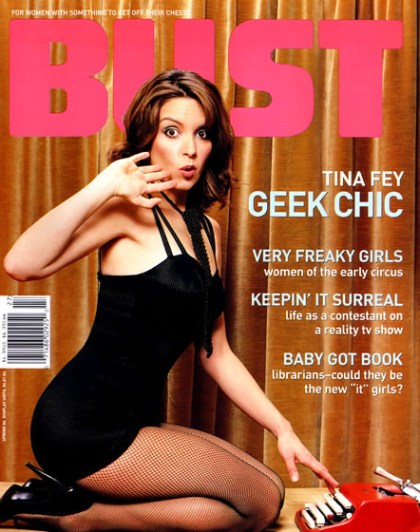
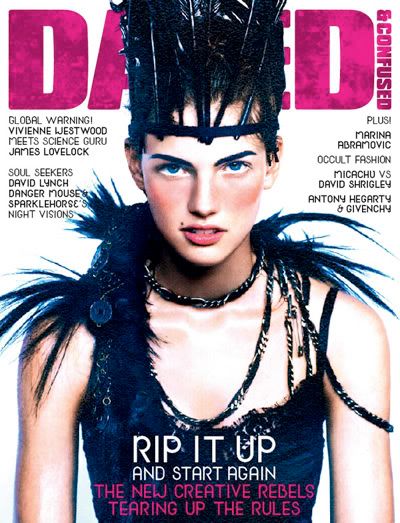
There have been a few Zine’s that have ended up becoming mainstream commercial publications, such as:

Giant robot
(image from www.giantrobot.com )

Bust
(image from threadtrend.com)


Dazed and confused
(image from www.designscene.net)

Thursday, March 17, 2011

Eco Freindly Fashion completed outfit


As I told you in the post before, our class was given the task to research in small groups Eco friendly designers in order to produce an outfit in a "pressure  test" situation. Our group researched Gary Harvey an Eco friendly designer and former creative director for Levis Europe. 

The following our photos of our finished outfit,


All up the finished outfit was constructed from 7 white garbage bags, 10 black garbage bags and undefined number of bubble gum wrappers.

Here is a photo of our classes work currently on display in the library, aren't they all unique and stunning :)

Sunday, March 13, 2011

Eco Freindly Fashion designers


Over the last two weeks, our class was given the task of researching in small groups Eco friendly designers in order to produce an outfit in a “pressure test” situation (I will post photos of our groups finished outfit later on)

Our group decided to research Gary Harvey, former creative director for Levis Europe and now one of the leading designers pioneering Eco fashion.Gary Harvey uses a wide range of recycled clothing and mass produced items to create stunningly beautiful dresses that are one of kind.


Dress constructed from 30 copies of the 'Financial Times'.
 (image from www.treehugger.com)


 dress constructed from cans, bottle tops and small cardboard boxes.
(image from inventorspot.com)


Dress constructed from 28 army jackets in various shades of green.
(image from ethicalfashionista.blogspot.com)

Dress constructed from 21 checkered laundry bags.
(image from over-it.blogspot.com)


Dress constructed from 18 trench coats.
(image from www.prlog.org)


For more information about Gary Harvey's work please visit his website at this Link 
and to see our groups completed outfit based on the research we did on Gary Harvey follow this link.